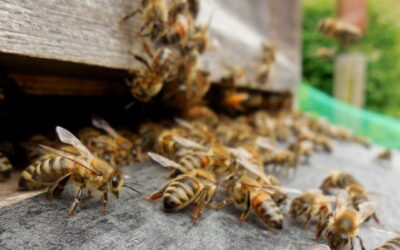
Until the end of the 1950s, beekeeping was mainly family-based, organized in small non-migratory apiaries. Observation “at the hive entrance” was the absolute reference for assessing the health of a colony. Native bee breeds, in balance with their environment—then rich in biodiversity—carried only a limited number of viruses (1 to 2), the main pathogens being rather bacterial (foulbrood) and fungal (nosemosis). Since the 1950s, beekeeping practices have evolved considerably, and the mobility of colonies has become the norm, both through migratory beekeeping to ensure honey harvests and through global exchanges of genetic material.
Viral carriage has increased, with no fewer than thirty-two viruses identified to date. A single bee may host 7 to 8 different viruses. The predominance of Nosema apis, which is only mildly pathogenic, has been replaced by Nosema ceranae, which is far more harmful and represents a new serious threat to colony health.
What research has already demonstrated
Scientific literature on the multiple roles of pathogens is particularly abundant, and we will limit ourselves here to a few of the most decisive for beekeeping practices.
Nosema ceranae
Its presence in the intestine can at any time lead to the collapse of the colony :
- either through the development of the pathogenic fungus in cases of food shortage, especially protein deficiency, or when sugars provided to the bees are poorly digestible,
- or through the collapse of the immune system in synergy with pesticides,
- or through stimulation of viral populations.
About viruses
Many facts deserve our attention: virus transmission may be vertical :
- all queens carry one or several viruses that they transmit to their offspring; the same observation applies to spermatozoa,
- nurse bees excrete large quantities of viruses through their hypopharyngeal glands and thus contaminate the larvae,
- Varroa destructor widely disseminates many viruses, either through passive carriage or as a host for viral replication,
- many viruses do not express themselves directly but induce the development of other viruses already present. Thus, the Deformed Wing Virus may not cause visible alterations in bees but may trigger symptoms of sacbrood because it stimulates the multiplication of SBV viruses,
- severe contamination symptoms appear with a thousand times fewer viral particles if the virus enters through the hemolymph rather than via the oral route.
Effectiveness of analytical methods
The major revolution of recent years has been the development of a new analytical method: qPCR (Polymerase Chain Reaction), which makes it possible to identify a pathogen through its DNA or RNA (RT-PCR).
Improvements in the different analytical steps and the multiplication of primers now allow the identification of any living organism in only a few hours.
Solu’Nature has established a partnership with the ADNucleis Laboratory to routinely offer an analytical package, PathoBEE 1, which enables the identification of the presence of 10 pathogens.
| Mushrooms | Nosémoses | Nosema apis et Nosema ceranae |
| Bacteria | Loque américain | Paenibacillus larvae |
| Virus | APV (=ABPV) | Acute paralysis virus |
| SBV | Sacbrood virus | |
| CBPV | Chronic paralysis virus = black disease | |
| DWV | Deformed Wing Virus Phenotype A | |
| VDV | Varroa virus = DWV phenotype B | |
| KBV | Virus kashmir | |
| SBPV | Slow paralysis virus | |
| BQCV | Black royal cell virus |
The analysis is performed on a pooled sample of 30 to 50 bees, because individual analyses do not always reveal the systematic presence of pathogens in each bee, and in this case the result is not representative of the infection status of the colony.
Thus, it becomes easier to understand the collapse of the densest colonies—those for which observation “at the hive entrance” appears the most reassuring. In fact, in cases of overpopulation, friction between bees causes micro-lesions in the cuticle (similar to the effect of organic acids), which become the most effective entry point for viral dissemination.
Be aware that the risk of collapse is significant when moving from a normally populated colony to one with a very high population density. For example, removing honey supers can cause a sudden increase in population density and trigger the development of various pathogens.
Dr. Gilles Grosmond, Veterinary expert – Solu’Nature